
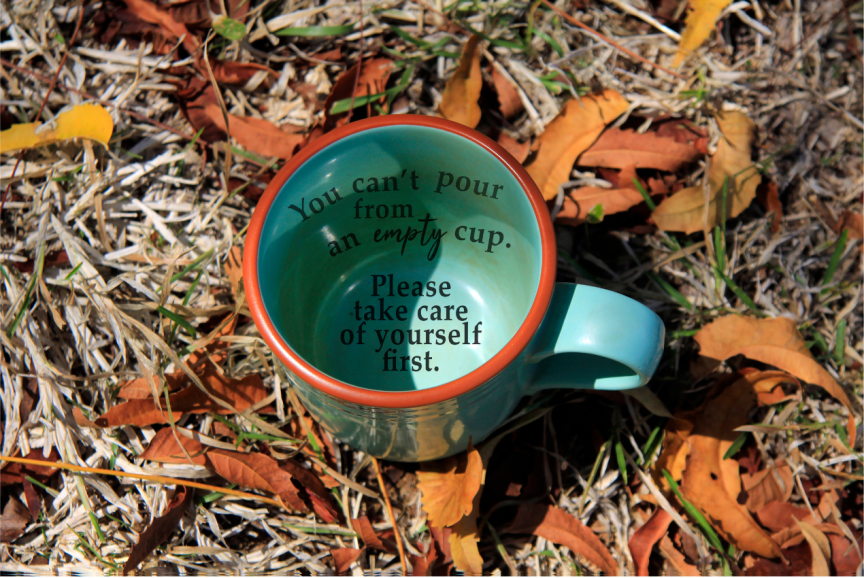
You Cannot Pour From an Empty Cup: The Importance of Self-Care for Mental Health Healthcare Workers
By Lorindi Steenkamp (Facility Manager, Mondia Dihlabeng)
Working in mental healthcare is a privilege, but it is also emotionally demanding.
Every day, healthcare workers walk alongside people during some of the most vulnerable moments of their lives. We listen to stories of pain, trauma, loss and uncertainty. We support patients through moments of crisis, celebrate their progress, sit with them in difficult moments and sometimes carry the emotional weight of their stories long after our shift has ended.
And yet, somewhere along the way, healthcare workers can become very good at caring for everyone except themselves.
We tell ourselves that we are coping. That there are patients who need us. That the team needs us. That there is always another task to finish, another problem to solve and another person who needs support.
But self-care is not selfish.
It is part of being able to care well.
The people behind the professionals
In healthcare, we often focus on the role: the nurse, the occupational therapist, the doctor, the case manager, the psychologist, the cleaner, the administrator, the security officer.
But behind every role is a person.
A person who gets tired.
A person who has difficult days.
A person who has a family waiting at home.
A person who sometimes needs someone to ask, “Are you okay?”
I have come to realise that looking after a healthcare team is not only about ensuring that the work gets done. It is about recognising the people doing the work.
For me, connection is a big part of this.
When people feel seen, heard and valued, they are more likely to feel that they belong. And when people feel that they belong, they are more likely to support one another, ask for help and show up for each other. And have pride in their roles.
Sometimes self-care starts with something as simple as saying:
“I see you. I appreciate you. How are you really doing?”
Compassion fatigue is real
Mental healthcare workers give so much of themselves emotionally.
We are expected to remain calm when situations are chaotic. We need to be compassionate when we are tired. We need to create safety for others while sometimes feeling overwhelmed ourselves.
Over time, this can contribute to compassion fatigue, emotional exhaustion and burnout.
And the danger is that it doesn’t always happen suddenly.
Sometimes it looks like becoming less patient.
Sometimes it looks like feeling emotionally numb.
Sometimes it is losing enthusiasm for something you once loved.
Sometimes it is taking your work home with you—replaying conversations, worrying about patients or thinking about what you could have done differently.
Sometimes it is simply waking up and thinking, “I don’t have anything left to give today.”
These are not signs that someone is weak or doesn’t care.
Often, they are signs that someone has been caring for too long without enough time to refill their own cup.
Self-care is more than bubble baths
When we talk about self-care, we often think about massages, exercise, holidays or taking a day off.
Those things can absolutely help.
But meaningful self-care goes deeper.
- It can mean setting boundaries.
- It can mean taking your lunch break instead of working through it.
- It can mean asking for help before you reach breaking point.
- It can mean saying no when everything in you is already saying “I can’t take on anything else.”
- It can mean talking to someone after a difficult patient interaction.
- It can mean going home and being fully present with your family instead of mentally remaining at work.
It can mean allowing yourself to be a healthcare worker and a mother/father, partner, friend, daughter or simply a human being.
Small things can make a big difference
Self-care does not have to be complicated.
Sometimes it is:
☕ Sitting down and actually enjoying your coffee.
🌿 Taking five quiet minutes between difficult moments.
🏃 Going for a run or getting your body moving.
📱 Putting your phone away when you get home.
❤️ Spending quality time with the people who matter most.
😂 Laughing with your colleagues.
🙏 Taking a moment to be grateful.
🗣️ Saying, “Today was difficult,” instead of pretending it wasn’t.
💛 Giving yourself permission to not have all the answers.
And perhaps most importantly, recognising when you need support.
We cannot give what we don’t have
Healthcare workers are often incredibly resilient people, But resilience should never mean that we have to carry everything alone.
We can be strong and still need support.
We can be passionate about our work and still need rest.
We can love our patients and still need boundaries.
We can be dedicated professionals and still prioritise our families and ourselves.
Self-care is not stepping away from our purpose.
It is what allows us to continue living it.
We encourage our patients to look after their mental health, to recognise their emotions, to ask for help and to create healthier ways of coping.
We need to give ourselves—and each other—the same permission.
Because behind every healthcare worker is a human being who also deserves care.
And perhaps the question we should be asking ourselves more often is not:
“How much more can I give?”
But rather:
“What do I need so that I can continue to give without losing myself in the process?”
Because taking care of yourself doesn’t make you less committed.
It helps you remain the person you came into healthcare to be.